Author: Senior Fitness & Nutrition Expert | 15+ years in clinical weight management Reading Time: 14 minutes | Last Updated: May 2026 Categories: Fat Loss, Nutrition, Metabolism, Training
⚠️  MEDICAL DISCLAIMER


The information provided in this article is intended for general educational and informational purposes only. It does not constitute medical advice, diagnosis, or treatment. Always consult a qualified healthcare professional, registered dietitian, or certified fitness expert before making significant changes to your diet, exercise routine, or health management plan.
Individual results vary. The experiences and outcomes described on this site are not guaranteed and may not reflect typical results. Health Fitness Aura content is written by experienced fitness and nutrition professionals and is reviewed for accuracy against current peer-reviewed research.

📚 Evidence-based content      ✅ Professionally reviewed      🔄 Regularly updated
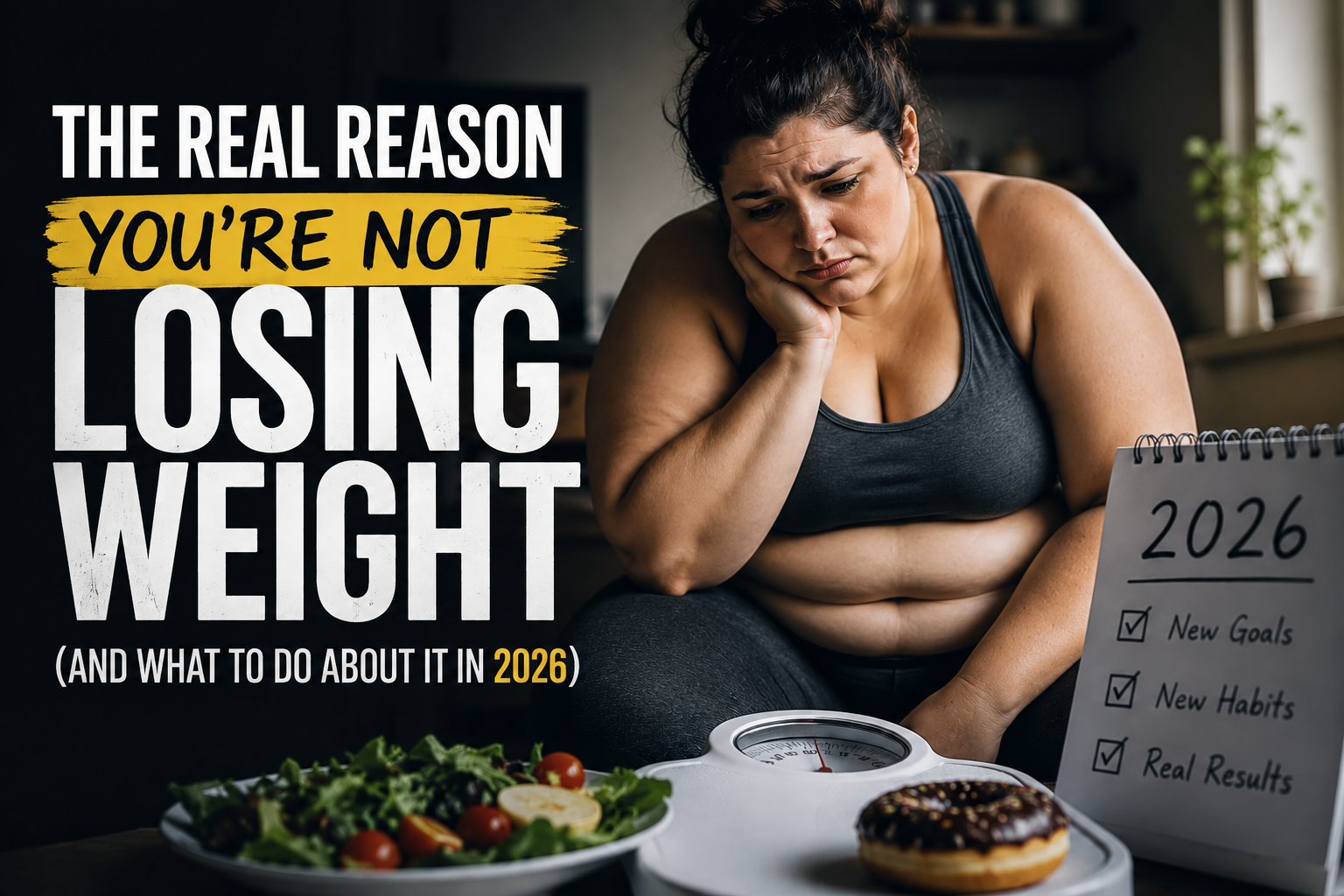
I remember the first client who made me question everything I thought I knew about weight loss.
She was 34, worked out five days a week, ate salads, avoided junk food, and hadn’t lost a single pound in four months. By every conventional measure, she was doing everything right. So I sat with her for two hours and went through her entire lifestyle — sleep, stress, food timing, training structure, all of it.
What I found wasn’t a lazy person looking for shortcuts. It was someone who had been given bad information for years, executing the wrong plan perfectly.
That’s the story for most people struggling with fat loss right now. It’s not about effort. It’s about understanding what your body is actually doing — and working with it, not against it.
This is the guide I give to everyone who comes to me after years of frustration. No supplements. No detox programs. No myths dressed up as science. Just the honest, complete picture of how fat loss actually works in 2025 — and exactly what to do about it.
First, Let’s Destroy the Myths That Are Keeping You Stuck
Before we talk about what works, we need to clear out what doesn’t — because fitness misinformation has reached epidemic levels, and some of these myths are costing people years of results.
Myth #1: You need to eat less and move more.
Technically true. Practically useless. This advice treats the human body like a simple bank account — calories in, calories out, problem solved. But your body is a living hormonal system that actively resists weight loss through appetite manipulation, metabolic slowdown, and behavioral changes. “Eat less, move more” is like telling someone with a broken leg to just walk it off. The underlying physiology is the problem.
Myth #2: Cardio is the best way to burn fat.
Cardio burns calories during the session. What it doesn’t do is change your body’s baseline metabolic rate once you stop. In fact, long-duration steady-state cardio can actually teach your body to become more efficient at that specific movement — meaning you burn fewer calories doing the same workout over time. There’s a better approach, and we’ll cover it.
Myth #3: Fat loss is linear.
People quit because they don’t lose weight every week and assume something is broken. In reality, the scale reflects water weight, sodium retention, hormonal fluctuations, and gut content — none of which are fat. True fat loss happens in the tissue, and it takes time to show up on a scale. Someone losing fat consistently can look the same on the scale for two weeks and then suddenly drop three pounds overnight. The biology didn’t change. The water retention did.
Myth #4: You can spot-reduce fat.
No exercise targets fat in a specific body region. Zero. None. Fat loss is systemic — your body decides where to pull stored fat from based on genetics, hormones, and the duration of your deficit. You can build muscle in a specific area (which changes its shape and definition), but you cannot melt fat from your belly by doing crunches. This is settled science, not open to debate.
Myth #5: A slow metabolism is your problem.
True metabolic disorders are rare. For the overwhelming majority of people, “slow metabolism” is a phrase that gives a comfortable explanation for an uncomfortable truth — the calorie math isn’t where they think it is. Metabolic rates do decline with age and dieting, but usually by far less than most people assume (50–150 calories per day, not the 500 people often cite). We can address this — but blaming the metabolism as an unchangeable fact is usually inaccurate.
Now that we’ve cleared the decks, here’s what’s actually happening inside your body when it burns fat.
The Science of Fat Burning — Explained Simply
When your body burns fat, it’s not doing something mysterious. It’s accessing stored energy.
Fat is stored in adipose tissue as triglycerides — molecules made of a glycerol backbone attached to three fatty acid chains. When your body needs energy and has used up available glucose, it releases an enzyme called hormone-sensitive lipase, which breaks those triglycerides apart. The fatty acids enter the bloodstream and travel to cells, where they’re burned for fuel through a process called beta-oxidation.
Here’s the part nobody tells you: the byproducts of fat metabolism are carbon dioxide and water. You exhale roughly 84% of the fat you burn. The rest leaves through sweat, urine, and breath vapor. Fat doesn’t sweat out, doesn’t get flushed by detox teas, and doesn’t disappear from belly wraps. It is metabolized and breathed away.
This matters because it explains exactly what your strategy needs to do: create the internal conditions where your body prefers to use stored fat as fuel. That means managing insulin, maintaining a calorie deficit, and supporting the hormonal environment that makes fat oxidation the path of least resistance.
Let’s build that environment.
The 12 Strategies That Actually Move the Needle
1. Build a Calorie Deficit — But Do It Intelligently
Everything in fat loss comes back to energy balance. But how you create that deficit changes everything about how your body responds.
A deficit that’s too aggressive — say, 1,000 calories or more below maintenance — triggers a cascade of physiological responses your body uses to protect itself from starvation. Cortisol rises. Thyroid hormone production slows. Muscle tissue gets cannibalized for energy. Hunger hormones spike. Your body becomes metabolically thrifty in ways that make continued fat loss progressively harder.
The sweet spot for most people is a deficit of 400–600 calories below daily maintenance. This is large enough to produce meaningful fat loss (roughly 0.5–1% of body weight per week) while small enough that your body doesn’t panic and slam the brakes on metabolism.
To find your maintenance calories, use this rough formula: multiply your body weight in pounds by 14 if you’re mostly sedentary, 16 if you’re moderately active, and 18 if you exercise intensively five or more days a week. Then subtract 500. That’s your starting point.
Recalculate every four to six weeks. As your weight drops, maintenance calories drop too — and what produced a deficit at 180 pounds might not be enough at 165.
2. Protein Is Your Most Powerful Tool — Use It Aggressively
I’ve changed the trajectory of dozens of weight-loss journeys simply by getting people to eat more protein. Not less food — more protein. The results are consistently dramatic.
Here’s why protein works so differently from other macronutrients.
First, it has the highest thermic effect of any macronutrient. Your body burns 20–30% of protein’s calories just processing and digesting it. When you eat 200 calories of protein, you net roughly 140–160 calories. Fat and carbohydrates don’t come close to this.
Second, protein is profoundly satiating. It suppresses ghrelin (hunger hormone) and boosts peptide YY and GLP-1 (satiety hormones) more powerfully than any other macronutrient. High-protein meals don’t just feed you — they actively reduce how much you want to eat for the next several hours.
Third, and critically for body composition, protein preserves muscle tissue during a calorie deficit. Without adequate protein, your body will break down muscle alongside fat to meet energy needs. This destroys your metabolism over time and leaves you looking soft even at lower weights.
Target 0.7–1.0 grams of protein per pound of bodyweight daily. For a 165-pound person, that’s 115–165 grams. Spread it across three to four meals. The best sources are lean chicken, turkey, eggs, Greek yogurt, cottage cheese, salmon, tuna, lentils, tempeh, and high-quality whey or casein protein if needed to hit your targets.
3. Resistance Training Transforms Your Fat-Burning Potential
Here’s what most people don’t understand: the real goal of exercise during fat loss isn’t to burn calories in the gym. It’s to build a body that burns more calories outside the gym.
Muscle is metabolically expensive tissue. Each pound of muscle burns approximately six calories per day at rest, compared to about two calories for a pound of fat. That doesn’t sound significant, but add ten pounds of lean mass over a year of training and you’ve permanently increased your resting metabolism by roughly 60 calories per day — without doing anything extra.
More importantly, resistance training creates something called EPOC — excess post-exercise oxygen consumption. After a hard strength session, your metabolism remains elevated for 24–48 hours as your body repairs muscle tissue, replenishes glycogen stores, and restores hormonal balance. A good lifting session keeps burning fat long after you’ve left the gym.
Train three to four days per week. Focus on compound movements that work multiple large muscle groups simultaneously: squats, deadlifts, Romanian deadlifts, bench press, rows, overhead press, chin-ups. These movements recruit the most muscle mass, produce the greatest hormonal response, and create the highest caloric demand.
You don’t need to lift heavy to start. Progressive overload matters more than any specific weight. Add a little more load, a few more reps, or reduce rest time each week. Consistent progression is the only rule that matters.
4. Reframe Cardio — Use It to Protect Your Heart, Not Just Burn Calories
This might be the most counterintuitive advice in this guide, but stick with me.
Cardio is excellent for cardiovascular health, mental wellbeing, and active recovery. It does burn calories, and those calories matter. But relying on cardio as your primary fat-loss tool is a losing strategy for most people, because the body adapts to it faster than almost any other stimulus.
Within weeks of starting a running routine, your body becomes more efficient at running. That means fewer calories burned per mile. A study published in the Journal of Applied Physiology found that trained endurance athletes had significantly lower metabolic rates during exercise than untrained individuals doing the same activity — because efficiency is the enemy of caloric expenditure.
The smarter approach: use cardio as a supplement to resistance training, not the centerpiece of your program. Three to four sessions per week of 30–40 minutes at moderate intensity is plenty for health. If you enjoy it and can do more without it interfering with recovery from strength training, go for it. But don’t skip the weights to add more cardio — you’ll be working against yourself.
HIIT (High-Intensity Interval Training) is worth including one or two days per week. Short bursts of maximum effort followed by recovery periods produce significant EPOC — sometimes comparable to 30–40 minutes of steady-state cardio in a 20-minute session. Sprint intervals, cycling sprints, or battle ropes work well.
5. Understand Insulin — It’s the Gatekeeper of Fat Burning
You cannot burn body fat effectively when insulin is elevated. This is not a dietary ideology — it’s basic endocrinology.
Insulin is released in response to rising blood glucose. Its primary job is to move glucose into cells for energy or storage. But insulin also signals fat cells to stop releasing stored fat and to take in more energy from the bloodstream. In the presence of high insulin, fat oxidation is essentially turned off.
This doesn’t mean carbohydrates are evil. It means that the composition and timing of your meals affect how much time you spend in a fat-burning state versus a storage state.
Practical strategies to keep insulin managed:
Reduce refined carbohydrates and added sugars. These spike blood glucose rapidly and aggressively, producing large insulin responses. Bread, pasta, white rice, pastries, sweetened drinks — these aren’t banned, but they should be minimized and contextualized (eaten after exercise when your muscles are hungry for glucose, for example).
Eat whole food carbohydrates with fiber and protein. Fiber slows glucose absorption. Protein blunts the insulin response to carbohydrates. A bowl of plain white rice spikes blood sugar dramatically. The same rice with chicken, vegetables, and olive oil produces a dramatically gentler response.
Consider eating windows. Going 12–16 hours without eating allows insulin to remain low for extended periods — expanding the window in which your body preferentially burns fat for fuel. This is the mechanism behind intermittent fasting.
6. Intermittent Fasting — When It Helps and When It Doesn’t
Intermittent fasting has become one of the most debated topics in nutrition, which means there’s about equal parts good information and nonsense floating around.
The honest answer: intermittent fasting works for fat loss primarily because it reduces the window in which you can eat, which tends to reduce total calorie intake. The metabolic benefits beyond calorie control — extended fat oxidation, cellular autophagy, improved insulin sensitivity — are real, but they’re secondary.
The most sustainable approach for most people is the 16:8 protocol: eat all your meals within an eight-hour window (say, noon to 8 PM) and fast for the remaining 16 hours. Morning hunger tends to diminish once the body adapts, usually within two weeks.
Who should try it: people who tend to overeat in the morning or who find meal skipping easier than calorie counting. If you can eat a 500-calorie breakfast without hunger being a problem, IF might not add much over regular calorie control.
Who should skip it: people with a history of disordered eating, anyone who experiences significant cognitive impairment while fasted, pregnant or breastfeeding women, and anyone whose training sessions fall early in the morning and suffer without pre-workout fuel.
Don’t force IF because it’s trendy. Use it only if it genuinely makes calorie management easier.
7. Sleep Is Not Optional. It Is Physiological Priority.
I’ll say something that might surprise you: of all the variables I’ve worked with over 15 years, sleep quality has the largest and most underappreciated effect on fat loss outcomes.
Here’s what happens when you’re chronically sleep deprived. Ghrelin — the hormone that tells you you’re hungry — rises by up to 15%. Leptin — the hormone that tells you you’re full — drops by a similar margin. The result is a body that’s physically hungrier than it should be, and slower to recognize satiety when it eats.
Meanwhile, cortisol elevates. Elevated cortisol suppresses fat oxidation, promotes fat storage in the abdominal region specifically, triggers cravings for high-calorie, high-sugar foods, and impairs the muscle-building response to resistance training.
Research from the University of Chicago found that participants on a calorie-restricted diet who slept only 5.5 hours per night lost 55% less fat and 60% more muscle than those who slept 8.5 hours — on identical diets and activity levels. Sleep didn’t change what they were eating. It changed what their bodies did with it.
Seven to nine hours is the target for most adults. Not in bed for seven hours — actually sleeping for seven hours. Sleep debt accumulates over weeks and genuinely impairs the hormonal environment for fat loss. You can’t out-train bad sleep.
For better sleep quality: keep your room between 65–68°F, eliminate all artificial light sources, avoid caffeine after 2 PM, and maintain consistent sleep and wake times — even on weekends. Consistency of sleep timing may matter as much as total duration.
8. Manage Stress Before It Manages Your Waistline
Chronic stress and excess body fat, particularly visceral abdominal fat, are deeply intertwined through a clear biological mechanism: cortisol.
Your body evolved to handle acute stress (run from predator, fight enemy, survive famine) by prioritizing energy storage. Cortisol redirects fat storage toward the abdomen, where it can be most quickly mobilized in an emergency. It also drives cravings for calorie-dense foods — exactly the ones that feel comforting under pressure.
In modern life, chronic psychological stress produces the same physiological response as acute physical danger, but without the physical resolution that would naturally bring cortisol back down. You sit in a stress meeting, cortisol spikes, it doesn’t drop because you haven’t run away from anything, and the fat storage signal stays on.
Practical cortisol management is not complicated, but it requires consistency.
Exercise helps — but not excessively. Moderate exercise lowers cortisol over time. Overtraining without adequate recovery raises it chronically. This is why training seven days a week often produces worse results than training four days with proper rest.
Breathwork and meditation have genuine, measurable effects on cortisol. Ten minutes of diaphragmatic breathing or guided meditation daily reduces cortisol levels meaningfully over four to six weeks. You don’t need a retreat or an app subscription — a timer and quiet space are enough.
Social connection is biologically stress-reducing. Not all stress management has to be solitary or formalized. Spending time with people you feel safe around lowers cortisol more reliably than many wellness protocols.
9. The Food Quality Principles That Actually Matter
You can lose weight eating McDonald’s every day if you’re in a calorie deficit. This is technically true and frequently proven. But body composition — the ratio of fat to muscle — and long-term metabolic health respond very differently to food quality.
Here are the food quality principles that produce the best fat-loss results:
Prioritize whole protein sources at every meal. This is the single highest-leverage dietary choice available. A meal built around protein — eggs, chicken, fish, legumes, Greek yogurt — naturally limits overconsumption of everything else.
Fill half your plate with vegetables. Not because vegetables are magic, but because they are extremely high-volume, low-calorie, high-fiber foods that create satiety without creating a meaningful calorie contribution. You physically cannot overeat broccoli and gain weight from it.
Eat fat — the right fats. Dietary fat does not directly cause body fat storage in meaningful amounts when calories are controlled. Avocados, olive oil, nuts, fatty fish, and eggs are satiating, anti-inflammatory, and essential for hormonal health. Eliminating fat from your diet impairs testosterone production, disrupts hormonal fat-burning signals, and makes food so unpalatable that adherence collapses.
Treat refined carbohydrates as calorie-dense additions, not staples. Bread, pasta, white rice, and similar foods aren’t forbidden. They’re just calorie-dense relative to their satiety value. If they’re your dietary foundation, you’ll constantly be fighting hunger on a budget. If they’re portions alongside protein and vegetables, they’re fine.
Green tea deserves a special mention. The catechin EGCG in green tea has been shown across multiple peer-reviewed studies to moderately enhance fat oxidation, particularly in the presence of exercise. It’s not a fat burner in any dramatic sense. But three to four cups daily provides real, cumulative support to a fat-loss program — plus meaningful antioxidant benefits and a slight caffeine boost without the anxiety spikes of coffee for most people.
10. NEAT — The Hidden Variable That Changes Everything
NEAT stands for Non-Exercise Activity Thermogenesis. It refers to all the calories you burn through movement that isn’t formal exercise — walking to the car, fidgeting, climbing stairs, gesturing while you talk, carrying groceries.
For most people, NEAT accounts for more daily calorie burn than all their formal workouts combined. And it’s the variable that collapses most dramatically when people diet aggressively.
When you cut calories significantly, your body compensates by unconsciously reducing NEAT. You sit a little more. You gesture a little less. You feel slightly more tired and choose the escalator. These changes feel imperceptible but accumulate to 200–400 fewer calories burned per day — essentially erasing your carefully constructed deficit.
The countermeasure is deliberate NEAT protection. Set a daily step goal of 8,000–10,000 steps and treat it as non-negotiable, separate from your workouts. Stand at your desk periodically. Take the stairs whenever available. Park farther away. Walk during phone calls. These aren’t fitness activities — they’re metabolism protection strategies.
A step tracker is genuinely useful here, not because steps themselves burn fat, but because they give you an objective measure of whether you’re unconsciously compensating for your diet with reduced movement.
11. Hydration — More Mechanistically Powerful Than You Think
Adequate hydration directly supports fat metabolism. This isn’t vague wellness advice — it’s specific biochemistry.
The process of lipolysis (breaking down fat for fuel) requires water. Fat metabolism is impaired even under mild dehydration. In a 2016 study published in the Journal of Clinical Endocrinology and Metabolism, drinking 500ml of water increased metabolic rate by 30% for approximately 30–40 minutes — partly because the body expends energy to heat the water to body temperature, and partly through direct effects on metabolic enzyme activity.
Beyond metabolism, thirst is systematically misread as hunger. The hypothalamus processes both thirst and hunger signals, and they can cross-activate — particularly in people who’ve spent years ignoring thirst cues. Drinking a full glass of water before every meal consistently reduces calorie intake in controlled studies by 75–90 calories per meal.
Target half your body weight in ounces of water daily. For a 170-pound person, that’s 85 ounces — roughly 10–11 cups. Increase this if you’re exercising hard in hot conditions.
Herbal teas, sparkling water, and plain coffee count toward hydration. Sweetened drinks, alcohol, and excessive caffeine impair it.
12. The Adherence Framework — Because Strategy Means Nothing Without Consistency
Here’s the brutal truth about fat loss programs: the best program in the world is worthless if you don’t follow it. And the most common reason people don’t follow programs isn’t lack of discipline — it’s that the program doesn’t fit their actual life.
After 15 years of working with clients, I’ve developed a simple adherence framework that produces far better long-term results than any specific diet or training protocol.
Start with subtraction, not addition. Most people approach fat loss by adding things: workouts, meal prep, supplements, tracking. The cognitive load of adding multiple new behaviors simultaneously is overwhelming. Instead, start by removing the two or three habits most clearly working against you — the nightly wine, the afternoon vending machine, the weekend takeaways. Removing obstacles is psychologically easier than building new habits, and the calorie impact is often larger.
Engineer your environment before you rely on willpower. Willpower is a finite resource that depletes throughout the day. By evening, most people have very little left. Stop relying on willpower at 9 PM and start making good choices the only easy choices. Remove high-calorie foods from your home. Put protein-rich snacks at eye level in the fridge. Lay out your gym clothes the night before. Prepare meals on Sunday so Tuesday at 7 PM doesn’t become a takeaway decision.
Use a 90% rule, not a 100% rule. People who aim for perfection fail the moment they have an imperfect day — which could be their first day off. People who aim for 90% compliance consistently outperform them over months and years, because they don’t spiral from one bad day into a bad week. One meal off plan doesn’t matter. Three consecutive weeks off plan does.
Make the feedback loop objective. Weigh yourself every morning, but average the readings across the week rather than reacting to individual days. Measure your waist monthly. Take progress photos every four weeks. You need data that spans long enough to show real trends, not daily noise.
Find your minimum effective dose. What’s the absolute minimum training and nutrition structure that would produce results you can maintain for two years? Start there. Most people overdesign their programs and burn out in six weeks. A simpler, sustainable program beats a complex one abandoned by March.
The One-Week Fat-Burning Blueprint
If you want a concrete starting point rather than just principles, here’s what a week looks like when you apply everything above:
Nutrition: Protein target hit daily (0.8g × bodyweight in lbs). Vegetables at every lunch and dinner. Refined carbohydrates kept to one moderate serving per day, timed around training. Sugary drinks eliminated. Water goal met. One flexible meal per week — no guilt, planned in advance.
Training: Monday, Wednesday, Friday — 45 minutes full-body resistance training (compound lifts). Tuesday, Thursday — 30 minutes moderate-intensity cardio or 20-minute HIIT. Saturday — active recovery (walk, swim, yoga, sport). Sunday — rest.
Daily habits: 8,000 minimum steps tracked. 7–9 hours of sleep protected. Morning hydration (500ml water on waking). Five to ten minutes of stress management practice — breathwork, journaling, or walking outside.
Tracking: Weekly average weight logged. Waist measured biweekly. Training performance logged for progressive overload.
This isn’t glamorous. It doesn’t require anything expensive, exotic, or extreme. But applied consistently for twelve weeks, it produces results that most trendy programs can’t match in twelve months.
What to Expect — And When to Expect It
Weeks 1–2: Water weight loss (often 2–5 lbs), increased energy from reduced sugar intake, initial adjustment to training volume. The scale may move dramatically, which reflects hydration changes, not fat loss.
Weeks 3–6: True fat loss begins to show. The scale slows but body measurements start changing. Clothes fit differently. Strength in the gym increases. Sleep quality often improves.
Weeks 7–12: Visible body composition changes. Metabolism has adapted to the new training load. Hunger becomes more manageable as protein and fiber intake normalize satiety hormones. This is where most people who stayed consistent start getting comments from others.
Months 4–6: The compounding phase. Muscle gain accelerates as the body recovers from initial calorie restriction. Fat loss continues but slows slightly as body weight drops. Maintenance becomes intuitive rather than effortful.
If you hit a plateau lasting more than three weeks, the solution is almost always one of four things: calories have crept up (measure again), calories need to decrease further (check your current weight and recalculate), training has stagnated (add intensity or volume), or sleep and stress have deteriorated (address the foundations before adding more restriction).
A Final Word
The fitness industry profits from your confusion. Complex protocols, proprietary supplements, and constantly shifting dietary dogma all serve the same commercial function — keeping you dependent on external solutions rather than empowering you to understand your own body.
The reality is simpler and more hopeful than the industry wants you to believe. Your body is exceptionally good at losing fat when you give it the right conditions: a moderate calorie deficit, adequate protein, resistance training, quality sleep, managed stress, and consistent movement.
None of that requires a specific program, a special product, or access to anything most people don’t already have.
What it does require is patience with the process and honesty about the habits. Not perfection — honesty. The people who transform their bodies permanently aren’t the ones who try hardest for the shortest time. They’re the ones who build the smallest sustainable habits and refuse to stop.
You already know more than enough to start. That’s the only thing that’s ever been true.
References & Further Reading
- Sacks FM et al. “Comparison of weight-loss diets with different compositions of fat, protein, and carbohydrates.” New England Journal of Medicine, 2009.
- Leidy HJ et al. “The role of protein in weight loss and maintenance.” American Journal of Clinical Nutrition, 2015.
- Nedeltcheva AV et al. “Insufficient sleep undermines dietary efforts to reduce adiposity.” Annals of Internal Medicine, 2010.
- Boschmann M et al. “Water-induced thermogenesis.” Journal of Clinical Endocrinology and Metabolism, 2003.
- Tremblay A et al. “Resistance training and fat loss: a systematic review.” Obesity Reviews, 2021.
- Sutton EF et al. “Early time-restricted feeding improves insulin sensitivity and blood pressure.” Cell Metabolism, 2018.
About the Author: A certified personal trainer and sports nutritionist with over 15 years of hands-on experience working with clients ranging from complete beginners to competitive athletes. Specializes in evidence-based fat loss, metabolic rehabilitation, and sustainable body composition change.
The information in this article is intended for general educational purposes and does not constitute personalized medical or nutritional advice. Always consult a qualified healthcare professional before significantly altering your diet or exercise routine.
© 2026 — All Rights Reserved. Do not reproduce without permission.
📌 EDITORIAL POLICY & FACT-CHECK NOTICE
How we write and review our content:
- ✅ Written by certified fitness and nutrition professionals with 15+ years of clinical experience.
- ✅ All health claims are supported by peer-reviewed research from PubMed, NCBI, and established medical journals.
- ✅ Research citations are linked directly within the article text for full transparency.
- ✅ Articles are reviewed and updated regularly to reflect the latest scientific evidence.
- ✅ Content follows Google’s YMYL guidelines and E-E-A-T standards for health and fitness information.
- ✅ We do not accept payment for editorial content. All recommendations are based on evidence and clinical experience.
📅 Last updated: May 2026 | 📚 Sources: See inline citations | ❓ Questions? Contact us