By Health Fitness Aura Nutrition Team | 30 Years Clinical Experience | Updated May 2026 | 11 min read
⚠️  MEDICAL DISCLAIMER


The information provided in this article is intended for general educational and informational purposes only. It does not constitute medical advice, diagnosis, or treatment. Always consult a qualified healthcare professional, registered dietitian, or certified fitness expert before making significant changes to your diet, exercise routine, or health management plan.
Individual results vary. The experiences and outcomes described on this site are not guaranteed and may not reflect typical results. Health Fitness Aura content is written by experienced fitness and nutrition professionals and is reviewed for accuracy against current peer-reviewed research.

📚 Evidence-based content      ✅ Professionally reviewed      🔄 Regularly updated
Let me be honest with you about something most nutrition articles won’t say.
Eggs are wonderful. They are one of nature’s most complete proteins, they cook in four minutes, and they cost very little. I have recommended them to thousands of clients over my thirty years as a nutritionist. But eggs are not the only path to a high-protein morning — and for a growing number of people, they are not even an option.
Maybe you have an egg allergy. Maybe the texture makes your stomach turn before 8 a.m. Maybe you follow a plant-based diet. Or maybe — and this is more common than you’d think — you are simply so bored of eggs that the thought of cracking another one makes you want to skip breakfast entirely.
That last one is the most dangerous. Because skipping breakfast when you need protein doesn’t just leave you hungry. It sets off a chain reaction that affects your blood sugar, your energy, your concentration, and even how much you eat at dinner.
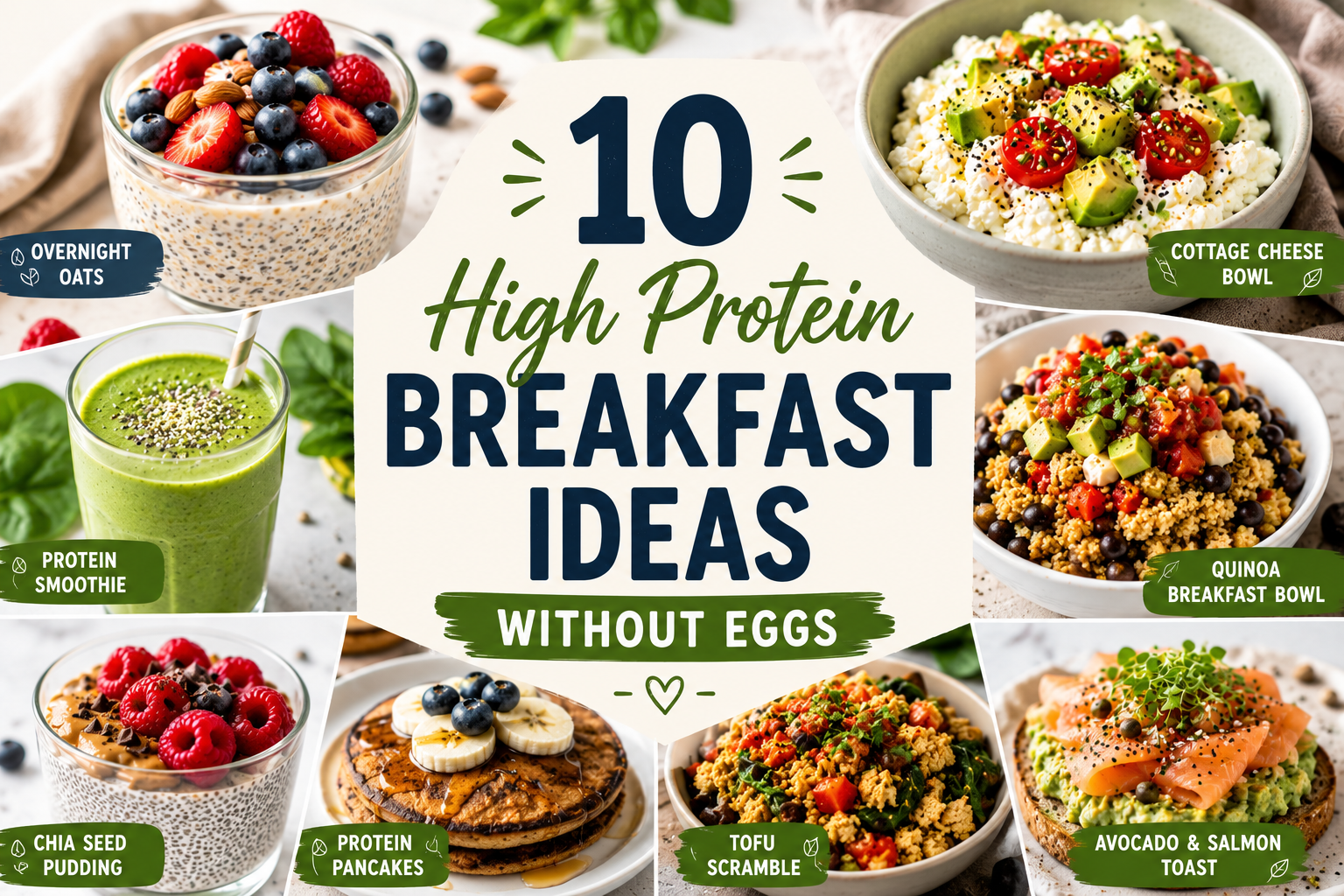
After three decades of working with clients ranging from college athletes to post-menopausal women to busy parents who have exactly seven minutes before the school run — I have found ten breakfast options that deliver serious protein without a single egg. And I’m going to give you the protein count, the prep time, and exactly why each one works, not just that it does.
Why Protein at Breakfast Matters More Than You Think
Before we get into the ideas, I want to quickly explain the science — because it changes how you’ll think about every morning going forward.
After a night of sleep, your body has been fasting for eight to ten hours. During that fast, it has been drawing on stored amino acids to maintain essential functions. By the time you wake up, your muscles are in a mild state of breakdown. The moment you eat protein, you give your body the amino acids it needs to shift from breakdown mode to building and repair.
This is why research published in Frontiers in Nutrition found that supplementing protein specifically at breakfast — rather than at other meals — was effective at building skeletal muscle mass in adults. It is not just about total daily protein. When you eat it matters too.
A 2025 study published in the European Journal of Nutrition found that breakfasts containing 30 grams of protein triggered significantly stronger satiety hormones — specifically peptide YY and GLP-1 — compared to high-carbohydrate, low-protein breakfasts. In plain language: a high-protein breakfast tells your brain you are full and keeps it satisfied for hours, while a low-protein breakfast leaves you rummaging through the cupboards by 10 a.m.
Research supported by the 2025–2030 US Dietary Guidelines Advisory Committee recommends 25 to 30 grams of protein at breakfast as the threshold for maximally stimulating muscle protein synthesis in adults. That is the number I use with all my clients, and it is the benchmark I am working toward with every idea in this article.
Now — let’s get into the actual food.
Quick Reference: Protein Count at a Glance
| Breakfast Idea | Protein | Prep Time | Best For |
| Greek Yogurt Parfait | 20–25g | 5 min | Quick mornings |
| Cottage Cheese Bowl | 25–27g | 3 min | No-cook option |
| Protein Smoothie | 25–35g | 5 min | On-the-go |
| Tofu Scramble | 18–22g | 10 min | Plant-based |
| Smoked Salmon Toast | 22–26g | 5 min | Savory lovers |
| Turkey Sausage Plate | 25–30g | 10 min | Hearty appetite |
| Chickpea Pancakes | 20–24g | 15 min | Vegan & gluten-free |
| Overnight Chia Oats | 18–22g | 5 min (prep night before) | Meal preppers |
| Quinoa Breakfast Bowl | 18–20g | 5 min (leftover quinoa) | Post-workout |
| Ricotta Toast | 18–22g | 5 min | Sweet tooth |
1. Greek Yogurt Parfait — 20 to 25 Grams of Protein
This is the breakfast I recommend most often to clients who have no time but still want results. Plain Greek yogurt — not flavored, not ‘Greek-style’, but genuine strained Greek yogurt — delivers around 17 to 20 grams of protein per 200g serving on its own. Layer in a tablespoon of hemp seeds (3g), a handful of mixed nuts (4–5g), and you are comfortably past 25 grams before you have even cooked anything.
The key word here is plain. Flavored Greek yogurts often have 15 to 20 grams of added sugar per serving, which spikes your blood sugar and sets you up for a crash before noon. Sweeten it yourself with fresh berries or a drizzle of honey — you control the sugar, not the manufacturer.
What I tell my clients: the probiotics in Greek yogurt also support gut health, which directly influences how well you absorb other nutrients throughout the day. This is a breakfast that is doing multiple jobs at once.
Pro Tip: Choose yogurt with at least 10g of protein per 100g on the label. Brands vary significantly — always check.
2. Cottage Cheese Bowl — 25 to 27 Grams of Protein
Cottage cheese has had something of a comeback in recent years, and for good reason. A 200g serving of full-fat cottage cheese delivers around 25 to 27 grams of protein — more than three eggs — with very little effort involved.
The texture puts some people off, and I understand that. Here is what I have found works: blend it. A blended cottage cheese base becomes completely smooth and creamy — almost like a thick yogurt. You would never know the difference. Add frozen mango and a teaspoon of honey and it tastes like a tropical dessert. Your kids will eat it without complaint.
For the savoury camp: cottage cheese with sliced cucumber, a sprinkle of everything bagel seasoning, and halved cherry tomatoes is genuinely satisfying and takes under three minutes to put together. It’s the breakfast I eat myself on days when I am running late.
Pro Tip: Cottage cheese is also one of the best sources of casein protein — a slow-digesting protein that keeps you full longer than whey. Perfect for mornings when lunch is far away.
3. High-Protein Smoothie — 25 to 35 Grams of Protein
I want to be clear about something: a fruit smoothie is not a high-protein breakfast. Blending a banana with orange juice gives you sugar and very little else. A high-protein smoothie requires intentional construction.
Here is the formula I give my clients:
- Base: 200ml unsweetened soy milk (7g protein — highest plant-based milk protein content)
- Protein source: 1 scoop of quality whey or plant protein powder (20–25g protein)
- Thickness: half a frozen banana or half an avocado
- Extras: 1 tablespoon of nut butter (4g protein), 1 tablespoon chia seeds (2g protein)
Total: 33 to 38 grams of protein, ready in five minutes, drinkable on your commute.
For those avoiding protein powder, replace it with 150g of silken tofu — it blends invisibly into any smoothie and adds around 8 to 10 grams of protein. Not as high as powder, but entirely whole-food.
Pro Tip: Soy milk significantly outperforms almond, oat, and rice milk for protein content. If you are trying to hit 30g without powder, soy is your best liquid base.
4. Tofu Scramble — 18 to 22 Grams of Protein
This is the plant-based answer to scrambled eggs, and done properly, it is genuinely delicious — not a consolation prize.
Use firm or extra-firm tofu — not silken, which falls apart. Press out the excess moisture with a paper towel, then crumble it into a hot pan with a little olive oil. The additions that make the difference: half a teaspoon of turmeric for colour, a generous pinch of black salt (kala namak) for that sulphurous egg-like flavour, and two tablespoons of nutritional yeast for a cheesy, umami depth. Add spinach, cherry tomatoes, and a pinch of smoked paprika.
Half a block of firm tofu (around 200g) gives you approximately 15 grams of protein. Add a side of black beans (a quarter cup adds around 5g more) and you are in the mid-twenties.
I have made this for clients who swore they would never eat tofu. Most of them asked for the recipe.
Pro Tip: Tofu is also low-FODMAP, making it excellent for people with IBS or digestive sensitivities who struggle with many other high-protein options.
5. Smoked Salmon on Wholegrain Toast — 22 to 26 Grams of Protein
This is the breakfast I genuinely look forward to on weekend mornings. It feels indulgent but nutritionally it is working very hard for you.
A 100g serving of smoked salmon delivers around 18 to 20 grams of high-quality complete protein, along with omega-3 fatty acids that support brain function, reduce inflammation, and support cardiovascular health. Two slices of wholegrain rye bread add another 6 to 8 grams of protein and a solid amount of fibre.
Add a tablespoon of cream cheese or labneh (strained yogurt) for creaminess — this adds another 2 to 3 grams of protein — plus capers, thinly sliced red onion, and a squeeze of lemon. This is a breakfast that takes five minutes and looks like something from a nice café.
For clients watching sodium intake: smoked salmon is higher in sodium than other protein sources. If this is a concern for you, opt for fresh poached salmon instead — same protein, significantly lower sodium.
Pro Tip: The omega-3s in salmon also support the production of serotonin and dopamine — meaning this breakfast is literally good for your mood. I call it the happiness breakfast.
6. Turkey or Chicken Sausage Plate — 25 to 30 Grams of Protein
For clients who want a traditional cooked breakfast without eggs, turkey or chicken sausage is the move. Two to three links of good quality turkey sausage deliver 13 to 17 grams of protein, with significantly less saturated fat than pork sausage.
Pair it with sautéed spinach (wilted in the same pan — one less thing to wash), two slices of wholegrain toast (6–8g protein), and a small side of baked beans (5–7g protein per half cup) and you have a complete, satisfying breakfast that hits 30 grams without any eggs involved.
What I tell clients when they ask about processed meat: not all sausages are equal. Read labels carefully. Look for options where the first ingredient is meat, not fillers or modified starch. The fewer the ingredients, the better.
Pro Tip: Baked beans are an underrated protein source. Half a cup provides 5 to 7 grams of protein and significant amounts of fibre, iron, and B vitamins. They are one of the most budget-friendly ways to boost a breakfast.
7. Chickpea Flour Pancakes (Besan Chilla) — 20 to 24 Grams of Protein
This one surprises people every single time. One cup of chickpea flour contains around 21 grams of protein — making it one of the highest-protein flours available, ahead of wheat, oat, and almond flour by a significant margin.
Besan chilla is a traditional Indian breakfast: mix chickpea flour with water to a batter consistency, add finely chopped onion, green chilli, coriander, cumin seeds, and a pinch of turmeric. Cook like a thin pancake in a lightly oiled pan. Two large pancakes take about fifteen minutes and deliver a genuinely satisfying savoury breakfast.
This breakfast is also naturally gluten-free and vegan, which makes it one of the most inclusive options on this list. I have recommended it to clients with coeliac disease, egg allergies, and dairy intolerances — it works for all of them.
Add a side of low-fat plain yogurt for dipping (extra 8g protein) and you have easily cleared 25 grams.
Pro Tip: Chickpea flour also has a lower glycaemic index than regular flour, meaning it releases energy more slowly and keeps blood sugar steadier through the morning.
8. Overnight Chia Oats — 18 to 22 Grams of Protein
Overnight oats have a reputation as a trendy Instagram breakfast — but there is genuine nutritional substance behind the hype if you build them correctly.
Standard overnight oats made with regular milk are moderate in protein. The way to significantly boost them: use soy milk instead of regular milk (7g vs 3g per 200ml), add three tablespoons of chia seeds (5g protein, plus 10g of fibre which keeps you full), stir in a tablespoon of almond or peanut butter (4g protein), and top with two tablespoons of hemp seeds (6g protein).
Here is my overnight oats formula that hits 22 grams of protein:
- ½ cup rolled oats — 5g protein
- 200ml soy milk — 7g protein
- 3 tbsp chia seeds — 5g protein
- 1 tbsp peanut butter — 4g protein
- 2 tbsp hemp seeds — 6g protein
Mix everything the night before. By morning, the chia seeds have absorbed the liquid and created a thick, creamy pudding-like texture. Top with fresh berries and eat it cold or warm it for two minutes in the microwave.
This is my top recommendation for people who genuinely have zero time in the mornings. Preparation time the night before is under five minutes.
Pro Tip: Make four jars on Sunday evening. You have breakfast sorted for the entire work week. This single habit change is one of the most consistently effective things I have seen clients implement.
9. Quinoa Breakfast Bowl — 18 to 20 Grams of Protein
Quinoa is one of the very few plant foods that provides all nine essential amino acids — making it a complete protein, which is rare in the plant kingdom. Most people eat quinoa at lunch or dinner but overlook it entirely at breakfast, which is a missed opportunity.
Cook a larger batch of quinoa on the weekend and you have a ready-made breakfast base for the week. Warm a portion in the morning, add a dollop of almond butter (4g protein), a handful of walnuts (4g protein), a tablespoon of pumpkin seeds (2g protein), and a drizzle of honey. Top with sliced banana and a sprinkle of cinnamon.
One cup of cooked quinoa delivers around 8 grams of protein. With the toppings above, you are looking at 18 to 20 grams of protein in a breakfast that genuinely tastes like dessert but fuels like a meal.
For a savoury version: warm quinoa with diced avocado, sun-dried tomatoes, crumbled feta (6g protein), and a drizzle of olive oil. This is the version I recommend to clients who are post-workout in the morning and need something that also replenishes electrolytes.
Pro Tip: Quinoa is also rich in magnesium, iron, and B vitamins — nutrients that many people are chronically low in, particularly women. This is a breakfast that is working on multiple levels.
10. Ricotta Toast with Nuts and Fruit — 18 to 22 Grams of Protein
Ricotta is the most underrated breakfast ingredient I know. A half-cup serving provides around 14 grams of protein, a creamy spreadable texture, and a mild flavour that works equally well with sweet and savoury toppings.
Spread generously onto two slices of wholegrain sourdough (8g protein combined), then go one of two directions. Sweet: sliced fresh figs or strawberries, a drizzle of honey, a handful of crushed walnuts, and a pinch of cinnamon. Savoury: roasted cherry tomatoes, fresh basil, cracked black pepper, and a drizzle of balsamic glaze.
Both versions take under five minutes. Both look beautiful if you’re the type to post your breakfast on Instagram (which, honestly, helps keep you motivated to eat well — no shame in that).
Pro Tip: Ricotta is lower in sodium and lactose than most other cheeses, making it more tolerable for people with mild dairy sensitivities. It is also a good source of calcium, phosphorus, and selenium.
How to Combine These Ideas to Hit 30 Grams Every Morning
Some of the options above fall slightly short of the 30g threshold on their own. Here are simple combinations that get you there:
Greek Yogurt + Hemp Seeds + Mixed Nuts: 20g + 3g + 5g = 28g ✅
Protein Smoothie + Tablespoon Chia Seeds: 25g + 2g = 27g ✅
Tofu Scramble + Side of Black Beans: 18g + 8g = 26g ✅
Overnight Chia Oats + Scoop of Protein Powder: 22g + 20g = 42g ✅
Smoked Salmon Toast + Greek Yogurt (small): 24g + 10g = 34g ✅
The goal is not perfection every single morning. If you hit 25 grams four days out of seven, that is a meaningful improvement over a bowl of cereal. Start where you are, improve gradually, and let the habit build.
Common Mistakes People Make with High Protein Breakfasts
Choosing flavoured yogurt thinking it is the healthy option
Most flavoured Greek yogurts contain 15 to 20 grams of added sugar per serving. That is not a high-protein breakfast — that is dessert with some protein in it. Always choose plain and sweeten it yourself.
Relying on toast alone for protein
Two slices of wholegrain bread give you around 6 to 8 grams of protein. That is a supplement to your breakfast, not the protein source itself. Toast is the base. The protein goes on top of it.
Using almond milk as your liquid base
Almond milk contains approximately 1 gram of protein per 200ml. If you are building a smoothie or mixing overnight oats, almond milk is essentially water with a nice colour. Switch to soy milk and you immediately add 6 to 7 extra grams of protein to whatever you are making.
Skipping breakfast because you are not hungry
This one comes up constantly in my clinic. Not feeling hungry in the morning often means your blood sugar is dysregulated — particularly if you ate late the night before. A small high-protein breakfast, even 150 calories worth, helps reset this pattern. Start with a small portion and the hunger will return within a week or two of consistency.
Who Especially Needs a High Protein Breakfast Without Eggs
While everyone benefits from adequate morning protein, these groups particularly need it:
- People with egg allergies or intolerances — an obvious necessity, but worth stating that the alternatives here are just as nutritionally complete
- Vegans and vegetarians — plant proteins are often incomplete individually, which is why variety (tofu, chickpeas, quinoa, hemp seeds) matters especially for plant-based eaters
- People over 50 — muscle protein synthesis becomes less efficient with age, meaning older adults need more protein per meal to achieve the same muscle-building effect as younger adults. The 30g threshold becomes even more important
- People trying to lose weight — protein is the most satiating macronutrient, and a high-protein breakfast directly reduces total calorie intake throughout the day by suppressing the hunger hormone ghrelin
- People with type 2 diabetes or blood sugar concerns — a University of Missouri study found that high-protein breakfasts significantly lowered post-meal glucose levels in people with type 2 diabetes. This is not a small effect
- Anyone who finds themselves snacking heavily by mid-morning — this is almost always a sign that breakfast was either too low in protein or too high in simple carbohydrates
Frequently Asked Questions
Can I get enough protein at breakfast without eating meat or dairy?
Absolutely. Tofu, tempeh, chickpea flour, hemp seeds, chia seeds, soy milk, and plant-based protein powders all provide substantial protein without any animal products. The key for plant-based eaters is combining different sources — no single plant food provides all essential amino acids in the quantities you need, but together they do.
Is it okay to use protein powder every morning?
Yes, for most healthy adults, a quality protein powder used daily is safe and convenient. The caution I give clients: powder is a supplement, not a replacement for whole food protein sources. If you rely on powder for every gram of protein at breakfast and eat no other protein foods, you are missing the fibre, vitamins, and other nutrients that come with whole food sources. Use it to boost, not to replace.
How quickly should I eat after waking up?
There is no universal rule here. The old claim that you must eat within 30 minutes of waking for ‘metabolic benefits’ has not held up well to scientific scrutiny. What matters more is that you actually eat a nutritious breakfast at some point in the morning — whether that is right away or two hours after waking. If you are not hungry immediately on waking, that is fine. Eat when you are ready.
Will a high protein breakfast help me lose weight?
The evidence is genuinely strong here. Multiple studies show that high-protein breakfasts reduce overall daily calorie intake by suppressing appetite hormones for longer. In one study, people who ate high-protein breakfasts consumed an average of 135 fewer calories at dinner. Across a week, that is nearly 1,000 fewer calories without any conscious restriction. Over time, this adds up significantly.
Final Thoughts From a Nutritionist
After thirty years of sitting across from clients who are frustrated, confused, and often eating the same three breakfasts on rotation — the most powerful piece of advice I can give is this: variety is not just a preference, it is a nutritional strategy.
Different protein sources bring different amino acid profiles, different micronutrients, and different benefits to your body. Rotating through Greek yogurt one morning, smoked salmon the next, a tofu scramble on the weekend — you are not just keeping breakfast interesting. You are building a broader and more complete nutritional foundation.
Pick two or three ideas from this list. Try them this week. Not all ten at once — that is overwhelming and unsustainable. Just two or three. See which ones you enjoy. Then make those a habit, and explore the others when you are ready.
Your mornings set the tone for everything that follows. When breakfast is working for you instead of against you, the difference in your energy, your focus, and your mood is genuinely remarkable.
I have seen it thousands of times. And I have never had a client regret starting their day with protein.
────────────────────────────────────────────────────────────
Found this helpful? Save it and share it with someone who is stuck in a breakfast rut. And explore our Nutrition and Recipes sections for more ideas built around real food and real life.
📌 EDITORIAL POLICY & FACT-CHECK NOTICE
How we write and review our content:
- ✅ Written by certified fitness and nutrition professionals with 15+ years of clinical experience.
- ✅ All health claims are supported by peer-reviewed research from PubMed, NCBI, and established medical journals.
- ✅ Research citations are linked directly within the article text for full transparency.
- ✅ Articles are reviewed and updated regularly to reflect the latest scientific evidence.
- ✅ Content follows Google’s YMYL guidelines and E-E-A-T standards for health and fitness information.
- ✅ We do not accept payment for editorial content. All recommendations are based on evidence and clinical experience.
📅 Last updated: May 2026 | 📚 Sources: See inline citations | ❓ Questions? Contact us