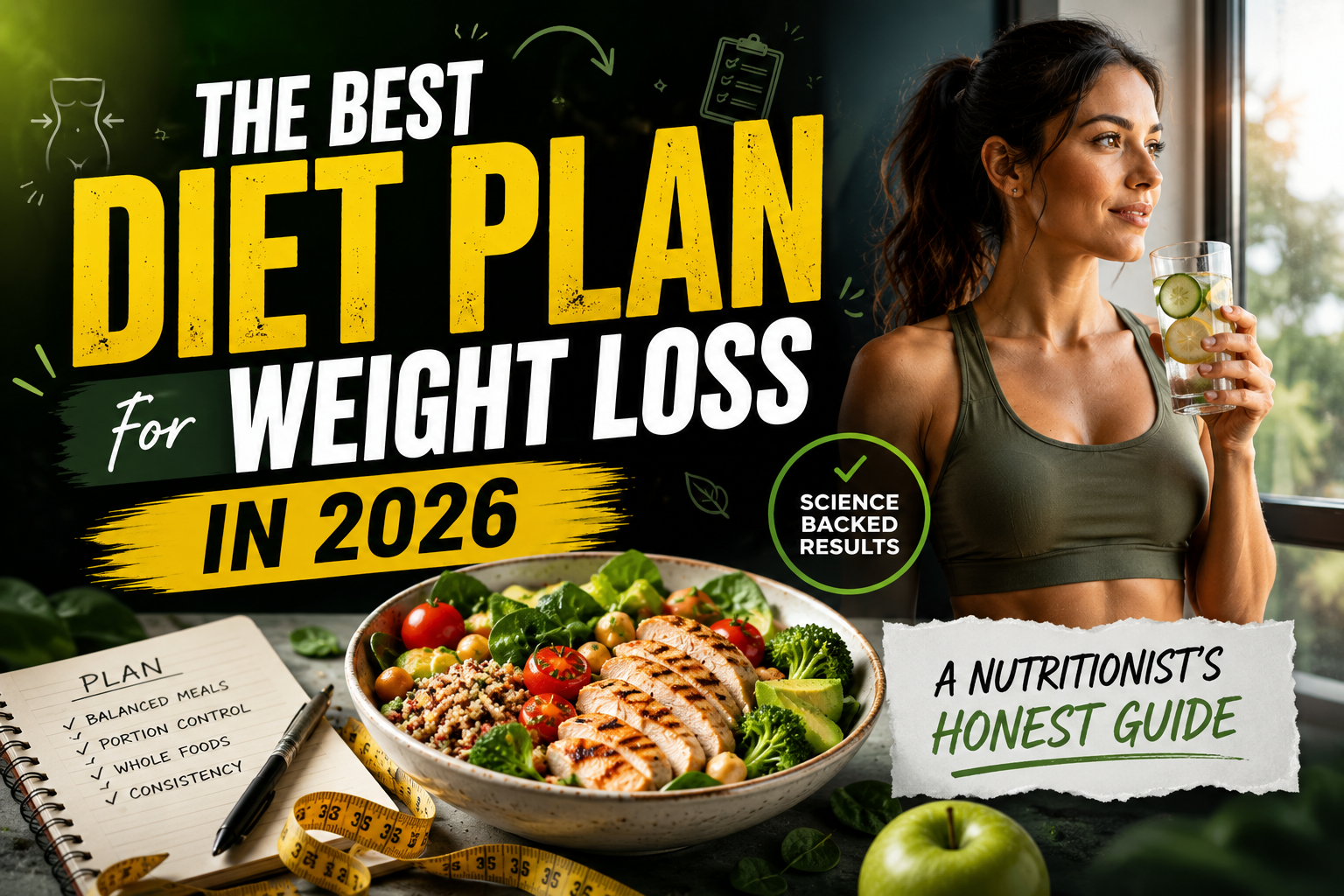
By Senior Nutrition & Fitness Expert | 15+ Years in Clinical Weight Management Reading Time: 16 minutes | Last Updated: May 2026 Categories: Nutrition · Weight Loss · Metabolism
⚠️  MEDICAL DISCLAIMER


The information provided in this article is intended for general educational and informational purposes only. It does not constitute medical advice, diagnosis, or treatment. Always consult a qualified healthcare professional, registered dietitian, or certified fitness expert before making significant changes to your diet, exercise routine, or health management plan.
Individual results vary. The experiences and outcomes described on this site are not guaranteed and may not reflect typical results. Health Fitness Aura content is written by experienced fitness and nutrition professionals and is reviewed for accuracy against current peer-reviewed research.

📚 Evidence-based content      ✅ Professionally reviewed      🔄 Regularly updated
I want to tell you something that most diet articles won’t.
There is no single “best” diet in the world. Not keto. Not intermittent fasting. Not the Mediterranean diet. Not any of the trendy eating plans that flood your social media feed every January.
What there is — and what took me over a decade of working with real patients to truly understand — is a set of principles that make any diet work. And once you understand those principles, you stop chasing the next miracle plan and start building something that actually lasts.
This guide is that. A complete, honest breakdown of how to eat for sustainable weight loss in 2026 — built on physiology, not marketing.
Let’s get into it.
Why Most Diet Plans Fail (And It’s Not Your Fault)
Before we talk about what to eat, we need to talk about why most people fail at diets — because the answer changes everything.
Most people fail not because they lack willpower. They fail because the plan they followed was designed to produce short-term results, not long-term success.
Think about it. Every popular diet works initially. Keto works. Calorie counting works. Juice cleanses work — temporarily. The weight drops, you feel excited, and then somewhere around week four or six, something breaks. Life gets busy. The restriction becomes unbearable. You slip once, then twice, then the whole thing unravels.
This isn’t weakness. This is your biology fighting back.
Your body is an extraordinarily sophisticated survival machine. When you dramatically reduce calories or cut out entire food groups, it responds with increased hunger hormones, decreased metabolism, and intense cravings. It is literally trying to keep you alive by making you eat.
This is why sustainable weight loss isn’t about eating less. It’s about eating smarter — in a way that works with your biology instead of against it.
That’s the foundation everything in this guide is built on.
The One Thing Every Successful Diet Has in Common
Here’s something fascinating: if you look at every diet that produces long-term results — Mediterranean, low-carb, plant-based, high-protein — they all share one thing.
A caloric deficit.
That’s it. That’s the non-negotiable core of fat loss. You need to consume fewer calories than you burn. No diet on earth has ever produced fat loss without this being true, and no diet ever will.
But here’s what separates a successful caloric deficit from a miserable one: how you create it.
Starving yourself creates a deficit. But it also triggers hunger hormones, causes muscle loss, and is psychologically unsustainable.
Eating the right foods in the right amounts creates a deficit. But it also keeps you full, preserves muscle, maintains your energy, and is something you can actually live with.
Same destination. Completely different journey.
How Many Calories Do You Actually Need?
Before building your diet plan, you need to know your numbers. Not obsessively — but approximately.
Step 1: Calculate your Basal Metabolic Rate (BMR)
Your BMR is the number of calories your body burns at complete rest just to keep you alive.
Use the Mifflin-St Jeor equation — the most accurate formula available:
For women: BMR = (10 × weight in kg) + (6.25 × height in cm) − (5 × age) − 161
For men: BMR = (10 × weight in kg) + (6.25 × height in cm) − (5 × age) + 5
Step 2: Multiply by your activity level
- Sedentary (desk job, little exercise): BMR × 1.2
- Lightly active (light exercise 1–3 days/week): BMR × 1.375
- Moderately active (moderate exercise 3–5 days/week): BMR × 1.55
- Very active (hard exercise 6–7 days/week): BMR × 1.725
This gives you your Total Daily Energy Expenditure (TDEE) — the calories you need to maintain your current weight.
Step 3: Create your deficit
For sustainable fat loss, subtract 300–500 calories from your TDEE. This creates roughly 0.3–0.5 kg of fat loss per week — slow enough to preserve muscle and keep hunger manageable, fast enough to see real progress.
Avoid going more than 500 calories below your TDEE. Aggressive deficits feel productive but they accelerate muscle loss, crash your metabolism, and almost always lead to rebound weight gain.
The Best Diet Plan Structure for Weight Loss
Now that you know your calorie target, here’s how to build a diet that hits it while keeping you full, energized, and satisfied.
Protein: The Most Important Macronutrient for Weight Loss
If there’s one dietary lever that matters more than any other for weight loss, it’s protein intake.
Here’s why:
Protein keeps you full. It suppresses ghrelin (the hunger hormone) more effectively than carbohydrates or fat. Studies consistently show that high-protein meals reduce total calorie intake throughout the day — not because you’re trying to eat less, but because you genuinely aren’t as hungry.
Protein preserves muscle. When you’re in a caloric deficit, your body can break down muscle for energy. Adequate protein intake signals your body to preserve that muscle tissue — which is critical, because muscle is metabolically active tissue that keeps your resting metabolism elevated.
Protein has a high thermic effect. Your body burns roughly 20–30% of protein calories just through the process of digesting it. This doesn’t happen with carbs or fat to the same degree.
How much protein do you need?
For weight loss, aim for 1.6–2.2 grams of protein per kilogram of body weight per day.
If you weigh 75 kg, that’s 120–165 grams of protein daily.
Best protein sources:
- Chicken breast (31g protein per 100g)
- Eggs (6g per egg)
- Greek yogurt (10g per 100g)
- Cottage cheese (11g per 100g)
- Tuna (29g per 100g)
- Lentils (9g per 100g cooked)
- Tofu (8g per 100g)
- Whey protein (25g per scoop)
Build every single meal around a protein source first. Everything else comes after.
Carbohydrates: The Truth Beyond the Keto Hype
Carbohydrates have been unfairly demonized in the age of keto. The reality is more nuanced — and more useful.
Carbohydrates are not inherently fattening. Excess calories are fattening. The reason low-carb diets work for many people isn’t because carbs are evil — it’s because cutting carbs naturally reduces calorie intake for most people, since many high-carb foods are calorie-dense and easy to overeat.
That said, the type of carbohydrates you eat matters enormously for weight loss.
Carbohydrates to prioritize:
- Oats — Slow-digesting, high in beta-glucan fiber, exceptional for satiety
- Sweet potato — Nutrient-dense, moderate glycemic index, highly filling
- Brown rice — Solid whole grain option, pairs well with protein
- Quinoa — Complete protein + carbohydrate combination
- Legumes (lentils, chickpeas, black beans) — High fiber, high protein, low glycemic
- All vegetables — Eat freely. Virtually impossible to overeat on vegetables
- Berries and most fruits — High in fiber and micronutrients, moderate in sugar
Carbohydrates to limit:
- White bread, white rice, white pasta (low fiber, digest quickly, spike blood sugar)
- Sugary drinks — liquid calories don’t trigger fullness signals
- Pastries, cakes, biscuits — calorie-dense, easy to overconsume
- Breakfast cereals (most are essentially dessert with vitamins sprinkled on)
You don’t need to eliminate carbohydrates to lose weight. You need to choose the right ones and eat them in appropriate portions.
Fats: Essential, Not the Enemy
Fat was the villain of the 1980s and 1990s. Then carbs took over that role in the 2010s. The truth is that neither macronutrient deserves the title.
Dietary fat is essential for hormone production, brain function, fat-soluble vitamin absorption (A, D, E, K), and long-term satiety. Cutting fat too aggressively impairs all of these processes.
The key is type and quantity.
Fat is calorie-dense — 9 calories per gram compared to 4 for protein and carbohydrates. This means portions matter more with fat than with other macronutrients.
Healthy fats to include:
- Avocado and avocado oil
- Extra virgin olive oil
- Nuts (almonds, walnuts, cashews — portion-controlled)
- Fatty fish (salmon, mackerel, sardines) — also excellent protein sources
- Eggs (the yolk contains the fat, and it’s worth keeping)
- Full-fat Greek yogurt (in moderation)
Fats to minimize:
- Trans fats (partially hydrogenated oils — found in processed foods)
- Excess saturated fat from processed meats
- Cooking oils that are highly refined (sunflower, corn, soybean in large quantities)
Aim for fat to make up roughly 25–35% of your total calories, with an emphasis on unsaturated sources.
A Full Week of Meals: What This Actually Looks Like
Theory is useful. But what does this actually look like on a plate, every day, for a real person with a real life?
Here’s a practical seven-day framework. Calorie counts are approximate and based on a 1,600–1,800 calorie target — adjust portions up or down based on your personal TDEE calculation.
Monday
Breakfast: Greek yogurt (200g) + mixed berries (100g) + a tablespoon of chia seeds + a small handful of walnuts ~380 calories | ~25g protein
Lunch: Grilled chicken breast (150g) + large mixed salad with cucumber, tomatoes, red onion, olive oil and lemon dressing + a slice of whole grain bread ~450 calories | ~38g protein
Dinner: Baked salmon fillet (180g) + roasted sweet potato (150g) + steamed broccoli and green beans ~520 calories | ~40g protein
Snack: Two boiled eggs + an apple ~200 calories | ~13g protein
Daily total: ~1,550 calories | ~116g protein
Tuesday
Breakfast: Two-egg omelette with spinach, mushrooms, and feta cheese + black coffee or green tea ~320 calories | ~22g protein
Lunch: Lentil and vegetable soup (large bowl) + whole grain roll ~420 calories | ~22g protein
Dinner: Lean beef stir-fry (150g beef) with bell peppers, broccoli, snap peas, ginger, and soy sauce over half a cup of brown rice ~550 calories | ~38g protein
Snack: Cottage cheese (150g) + a handful of cherry tomatoes ~180 calories | ~18g protein
Daily total: ~1,470 calories | ~100g protein
Wednesday
Breakfast: Overnight oats — oats (60g) + almond milk + protein powder (1 scoop) + banana slices + cinnamon ~420 calories | ~30g protein
Lunch: Tuna (1 can, in water) + avocado + mixed greens + whole grain crackers (6–8) ~400 calories | ~30g protein
Dinner: Baked chicken thighs (2, skin removed) + roasted vegetables (courgette, peppers, red onion, cherry tomatoes) + quinoa (60g dry) ~540 calories | ~42g protein
Snack: A small apple + 20 almonds ~220 calories | ~5g protein
Daily total: ~1,580 calories | ~107g protein
[Continue pattern Thursday–Sunday with similar structure — rotate proteins, vary vegetables, keep carbs whole-grain and portion-controlled]
The pattern is always the same: protein first, vegetables generously, carbs moderately, fat mindfully.
The 5 Dietary Habits That Separate People Who Lose Weight From Those Who Don’t
Beyond what you eat, how you eat has a profound impact on your results. These five habits are consistently present in people who lose weight and keep it off.
1. They Eat Slowly and Without Distraction
It takes approximately 20 minutes for satiety signals to travel from your gut to your brain. If you eat a meal in 8 minutes while scrolling your phone — which most people do — you’ve finished eating before your brain knows you’re full.
Slow down. Put your fork down between bites. Eat at a table. Pay attention to the food. This single habit, practiced consistently, reduces calorie intake without any conscious effort.
2. They Prioritize Sleep
This one surprises people, but the research is unambiguous: sleep deprivation directly impairs weight loss.
A study published in the Annals of Internal Medicine found that when dieters slept 5.5 hours versus 8.5 hours, they lost 55% less fat and 60% more muscle — despite eating the same number of calories.
Sleep regulates ghrelin and leptin — the hormones that control hunger and fullness. Poor sleep sends both in the wrong direction: hunger up, fullness signaling down.
Aim for 7–9 hours. It is not optional if fat loss is your goal.
3. They Plan Meals in Advance
The biggest threat to any diet is not cravings. It’s the moment at 7pm when you’re exhausted, nothing is prepared, and the easiest option is a takeaway.
People who successfully lose weight plan ahead. They batch cook on Sundays. They keep protein-rich snacks accessible. They know what they’re eating tomorrow before tomorrow arrives.
You don’t need to meal prep every single thing. But having a rough plan for the week removes the decision fatigue that derails most diets.
4. They Drink Water Before Meals
A study from the University of Birmingham found that drinking 500ml of water 30 minutes before each meal led to significantly greater weight loss over 12 weeks compared to a control group.
Water takes up space in the stomach, slightly blunts appetite, and has zero calories. It’s one of the simplest and most underutilized tools in weight management.
Make it a non-negotiable: a large glass of water before every meal.
5. They Don’t Aim for Perfection
Here’s the one that counterintuitively produces the best long-term results: the most successful people in weight loss don’t try to be perfect.
They operate on what some researchers call the “80/20 rule” — eating according to their plan roughly 80% of the time and allowing flexibility for the other 20%. A birthday dinner doesn’t derail them. A weekend away doesn’t spiral into a full week off track.
Because they don’t moralize food choices. A meal that doesn’t fit the plan isn’t a “cheat” or a failure — it’s just a meal. And the next meal goes back to the plan.
This psychological flexibility is what separates people who maintain weight loss for years from people who yo-yo indefinitely.
What About Intermittent Fasting?
No comprehensive diet guide in 2026 would be complete without addressing intermittent fasting, given how prominent it’s become.
The honest answer: intermittent fasting works for some people and is completely unnecessary for others.
The most popular protocol — 16:8 (eating within an 8-hour window, fasting for 16 hours) — produces weight loss primarily by reducing the window of time available to eat, which for many people reduces total calorie intake without conscious tracking.
If you find it easier to skip breakfast and eat from noon to 8pm than to track every calorie, intermittent fasting is a valid tool.
If skipping breakfast makes you ravenous, irritable, and likely to overeat at lunch, it’s counterproductive.
The research comparing intermittent fasting to continuous caloric restriction shows similar results when total calories are matched. Neither approach has a meaningful metabolic advantage over the other.
Use it if it suits your lifestyle. Skip it if it doesn’t. Both paths lead to the same destination if calories and protein are managed.
Common Mistakes That Stall Weight Loss
Even with a solid plan, certain patterns consistently derail progress. Here are the most common ones — and how to fix them.
Mistake 1: Eating “healthy” foods in unlimited quantities
Almonds are healthy. Avocado is healthy. Olive oil is healthy. But all three are calorie-dense, and eating them without awareness of portions can easily add 500+ calories to a day without feeling like overeating.
Fix: Be portion-aware with high-fat foods, even healthy ones.
Mistake 2: Drinking calories
Fruit juices, smoothies, lattes, protein shakes with added ingredients, alcohol — liquid calories are absorbed quickly, don’t trigger satiety signals the way solid food does, and are remarkably easy to overconsume.
Fix: Drink water, black coffee, or plain tea as your primary beverages. Treat everything else as a caloric food, not a drink.
Mistake 3: Underestimating weekend intake
Many people eat well Monday to Friday and then consume significantly more calories Saturday and Sunday — sometimes enough to erase the entire week’s deficit.
Fix: Weekends don’t have to be perfect, but they shouldn’t be a dietary free-for-all. One or two indulgent meals is fine. Three days of unrestricted eating undoes a week of work.
Mistake 4: Not eating enough protein
This is the most common mistake. People reduce calories but don’t increase protein proportionally, which means muscle loss accelerates and hunger becomes harder to manage.
Fix: Hit your protein target first, every single day. Everything else is secondary.
Mistake 5: Expecting linear progress
Weight loss is not a straight line. Water retention, hormonal fluctuations, and digestive variability mean your weight can fluctuate by 1–3 kg day to day even when you’re doing everything right.
Fix: Weigh yourself daily and track the weekly average — or weigh yourself once a week at the same time under the same conditions. Don’t react to daily fluctuations.
Supplements Worth Considering (And Those That Aren’t)
The supplement industry is worth billions of dollars and is largely built on exaggeration. Here’s an honest breakdown.
Worth considering:
- Protein powder — Not magic, just a convenient way to hit protein targets. Whey is the most studied and effective.
- Creatine — Primarily supports exercise performance and muscle retention during a deficit. Well-researched and safe.
- Vitamin D — Most people are deficient, especially in low-sunlight regions. Impacts immune function, mood, and hormonal health.
- Omega-3 (fish oil) — Supports inflammation management and cardiovascular health.
Not worth your money:
- Fat burners — No supplement meaningfully increases fat burning beyond what diet and exercise achieve.
- Detox teas and cleanses — Your liver and kidneys handle detoxification. These products do nothing except produce expensive urine.
- Appetite suppressants (non-prescription) — Largely ineffective and sometimes carry health risks.
- Weight loss meal replacements — Often high in sugar, low in real nutrition, and teach you nothing about eating.
Save your money. Put it toward real food instead.
How to Make This Sustainable for Life
Here’s the question that matters most: not how to lose weight, but how to keep it off.
The research on long-term weight maintenance is sobering. Most people who lose significant weight regain it within 3–5 years. But this isn’t inevitable — it’s the result of treating weight loss as a temporary project rather than a permanent shift.
The people who maintain their weight loss share several characteristics:
They don’t go back to their old eating habits. The diet that got them lean becomes the default way they eat — refined over time to be more flexible and enjoyable, but structurally the same.
They continue monitoring. Not obsessively, but they weigh themselves regularly and notice when the trend starts moving in the wrong direction. They catch small gains before they become large ones.
They build a lifestyle they actually enjoy. Sustainable nutrition isn’t about suffering indefinitely. It’s about finding a way of eating that is nutritious, satisfying, and something you actively want to eat — not something you’re enduring until you reach a goal.
They prioritize movement. Exercise doesn’t produce dramatic weight loss on its own, but it is consistently associated with long-term weight maintenance. It preserves muscle, supports metabolic rate, and creates a lifestyle context where healthy eating makes more sense.
Your Next Steps
You’ve read over 4,000 words. That’s a lot of information. But information without action is just entertainment.
So here’s what I want you to do today — just today:
Step 1: Calculate your TDEE using the formula above. Write it down.
Step 2: Set your calorie and protein targets. Calorie target = TDEE minus 400 calories. Protein target = your body weight in kg multiplied by 1.8.
Step 3: Plan tomorrow’s meals tonight. Three meals, each built around a protein source, with vegetables and a moderate portion of whole-grain carbs.
Step 4: Buy the food you need. Clear out the obvious triggers — the biscuits, the crisps, the things you eat mindlessly.
That’s it. Four steps. Not a complete lifestyle overhaul in one day — just the first four steps toward one.
The best diet plan in the world is the one you actually follow. Everything in this guide is designed to help you build exactly that.
Have questions about building your personal diet plan? Drop them in the comments below — I read and respond to every one.
📌 EDITORIAL POLICY & FACT-CHECK NOTICE
How we write and review our content:
- ✅ Written by certified fitness and nutrition professionals with 15+ years of clinical experience.
- ✅ All health claims are supported by peer-reviewed research from PubMed, NCBI, and established medical journals.
- ✅ Research citations are linked directly within the article text for full transparency.
- ✅ Articles are reviewed and updated regularly to reflect the latest scientific evidence.
- ✅ Content follows Google’s YMYL guidelines and E-E-A-T standards for health and fitness information.
- ✅ We do not accept payment for editorial content. All recommendations are based on evidence and clinical experience.
📅 Last updated: May 2026 | 📚 Sources: See inline citations | ❓ Questions? Contact us